Category: AI

  • The Rise of Robotics in AI

    Robotics, a multidisciplinary field merging engineering, computer science, and artificial intelligence, focuses on designing, building, operating, and applying robots. These machines are increasingly sophisticated, capable of performing tasks autonomously or semi-autonomously, transforming industries and redefining human-machine interaction.

    The evolution of robotics has seen machines move from repetitive industrial tasks to more complex, cognitive functions. Industrial robots have long been staples in manufacturing, assembling products with speed and precision. Today, we witness the rise of service robots in healthcare, assisting in surgeries and patient care; in logistics, optimizing warehouse operations; and even in homes, performing cleaning and security functions. The integration of AI, particularly machine learning and computer vision, has propelled robotics beyond mere automation to truly intelligent systems.

    Modern robots incorporate advanced sensors, actuators, and sophisticated control systems, often leveraging AI for decision-making, object recognition, and navigation. Machine learning allows robots to adapt to new environments and learn from experience, while computer vision enables them to perceive and interpret their surroundings. This synergy is crucial for applications like autonomous vehicles, where robots must make split-second decisions based on real-time data from various sensors.

    Despite their impressive capabilities, robotics still faces significant challenges. Developing robots that can robustly handle unpredictable environments, mimic human dexterity, and interact seamlessly in unstructured settings remains a complex engineering feat. Ethical considerations surrounding job displacement, safety, and the societal impact of increasingly autonomous machines are also central to the ongoing discourse. As robotics continues to advance, the collaboration between humans and robots is set to redefine productivity, safety, and daily life across all sectors.
  • Computer Vision: Seeing the Digital World

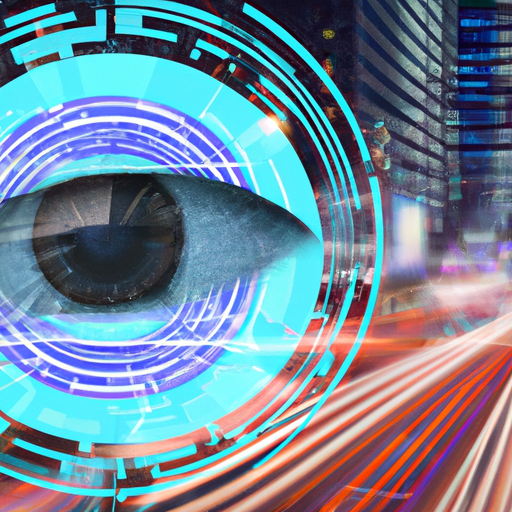
    Computer Vision, a pivotal field within artificial intelligence, grants machines the ability to “see” and interpret the visual world. It’s about enabling computers to derive meaningful information from digital images and videos, transforming raw pixels into actionable understanding. This capability is rapidly reshaping industries and augmenting human potential in countless ways.

    The applications of computer vision are vast and ever-expanding. In manufacturing, it powers quality control systems, detecting flaws in products with precision far exceeding human capability. Autonomous vehicles rely on it to perceive their surroundings, recognize pedestrians, traffic signs, and other vehicles, ensuring safe navigation. Medical imaging benefits immensely, with AI assisting in the early detection of diseases by analyzing X-rays, MRIs, and CT scans, leading to more accurate diagnoses and treatment plans.

    At its technical core, computer vision involves sophisticated algorithms and deep learning models, particularly convolutional neural networks (CNNs). These networks are trained on enormous datasets of images to recognize patterns, objects, and even subtle nuances. Processes like object detection, image segmentation, facial recognition, and motion tracking are all products of advanced computer vision techniques. These systems learn to extract features from images, compare them to learned patterns, and make classifications or predictions.

    While remarkably powerful, computer vision still grapples with challenges suchs as understanding context, dealing with variations in lighting and occlusion, and ensuring ethical deployment to prevent bias. Nevertheless, the continuous advancements in computational power and algorithmic sophistication mean that computer vision will increasingly integrate into our lives, offering unprecedented levels of automation, safety, and insight across sectors from retail to robotics, making machines truly intelligent observers of our world.

  • The Power of Natural Language Processing (NLP)

    Natural Language Processing (NLP) stands at the fascinating intersection of artificial intelligence and linguistics, enabling computers to understand, interpret, and generate human language. This sophisticated branch of AI is pivotal in bridging the communication gap between humans and machines, allowing devices and software to process text and speech in a way that mimics human comprehension.

    The applications of NLP are ubiquitous in our daily lives. Think of the seamless experience of voice assistants like Siri or Alexa, the precise translations offered by Google Translate, or the intelligent spam filters that keep our inboxes clean. NLP also powers sentiment analysis, helping businesses understand customer feedback from reviews and social media. In content creation, it’s used for text summarization, grammar checking, and even generating entire articles, streamlining workflows and enhancing efficiency.

    At its core, NLP relies on a blend of computational linguistics, machine learning, and deep learning. Techniques like tokenization, stemming, lemmatization, and part-of-speech tagging break down language into manageable components. More advanced methods, such as recurrent neural networks (RNNs) and transformer models (like GPT), enable machines to grasp context, nuances, and even the emotional tone within complex sentences. These models learn from vast amounts of text data, identifying patterns and relationships that allow them to make informed predictions and generate coherent language.

    Despite its remarkable advancements, NLP faces ongoing challenges, particularly with ambiguity, sarcasm, and cultural nuances in human language. The diversity of human expression means that continuously refining models to achieve truly human-like understanding remains an active area of research. Nevertheless, NLP continues to evolve rapidly, promising even more intuitive and powerful interactions between humans and the digital world, transforming industries from customer service to scientific research.

  • Understanding Machine Learning

    Machine learning (ML), a powerful subset of artificial intelligence, is revolutionizing how we interact with technology and understand complex data. At its core, ML enables systems to learn from data, identify patterns, and make decisions with minimal human intervention. Unlike traditional programming, where every rule is explicitly coded, ML algorithms improve their performance over time by analyzing vast datasets, adapting and evolving with new information.

    The applications of machine learning are incredibly diverse. From personalized recommendations on streaming services and e-commerce sites to fraud detection in financial institutions, ML algorithms work silently in the background, making our digital experiences more intuitive and secure. In healthcare, ML assists in diagnosing diseases, predicting patient outcomes, and accelerating drug discovery. Autonomous vehicles, another prominent example, rely heavily on ML to interpret sensor data, navigate roads, and react to dynamic environments.

    Key to machine learning are various algorithms, including supervised, unsupervised, and reinforcement learning. Supervised learning, the most common, uses labeled data to train models to predict outcomes, such as classifying emails as spam or not-spam. Unsupervised learning, conversely, finds hidden patterns in unlabeled data, often used for customer segmentation. Reinforcement learning trains agents to make sequences of decisions to maximize a reward, famously used in game-playing AI.

    Despite its transformative potential, machine learning is not without its challenges. Data bias can lead to unfair or inaccurate predictions, necessitating careful data curation and ethical considerations. The complexity of some models, often dubbed “black boxes,” can make it difficult to understand how decisions are reached, posing transparency issues. Nevertheless, ongoing research and development continue to push the boundaries of ML, making it an indispensable tool for innovation across almost every industry, shaping a future where intelligent systems become increasingly integrated into our daily lives.