Author: cursortest

  • The Rise of Robotics in AI

    Robotics, a multidisciplinary field merging engineering, computer science, and artificial intelligence, focuses on designing, building, operating, and applying robots. These machines are increasingly sophisticated, capable of performing tasks autonomously or semi-autonomously, transforming industries and redefining human-machine interaction.
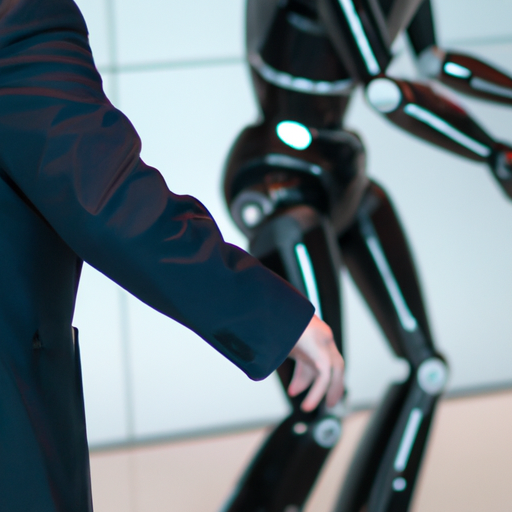
    The evolution of robotics has seen machines move from repetitive industrial tasks to more complex, cognitive functions. Industrial robots have long been staples in manufacturing, assembling products with speed and precision. Today, we witness the rise of service robots in healthcare, assisting in surgeries and patient care; in logistics, optimizing warehouse operations; and even in homes, performing cleaning and security functions. The integration of AI, particularly machine learning and computer vision, has propelled robotics beyond mere automation to truly intelligent systems.

    Modern robots incorporate advanced sensors, actuators, and sophisticated control systems, often leveraging AI for decision-making, object recognition, and navigation. Machine learning allows robots to adapt to new environments and learn from experience, while computer vision enables them to perceive and interpret their surroundings. This synergy is crucial for applications like autonomous vehicles, where robots must make split-second decisions based on real-time data from various sensors.

    Despite their impressive capabilities, robotics still faces significant challenges. Developing robots that can robustly handle unpredictable environments, mimic human dexterity, and interact seamlessly in unstructured settings remains a complex engineering feat. Ethical considerations surrounding job displacement, safety, and the societal impact of increasingly autonomous machines are also central to the ongoing discourse. As robotics continues to advance, the collaboration between humans and robots is set to redefine productivity, safety, and daily life across all sectors.
  • Computer Vision: Seeing the Digital World

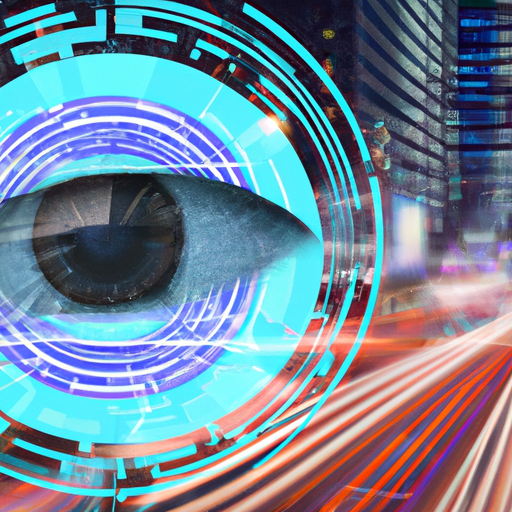
    Computer Vision, a pivotal field within artificial intelligence, grants machines the ability to “see” and interpret the visual world. It’s about enabling computers to derive meaningful information from digital images and videos, transforming raw pixels into actionable understanding. This capability is rapidly reshaping industries and augmenting human potential in countless ways.

    The applications of computer vision are vast and ever-expanding. In manufacturing, it powers quality control systems, detecting flaws in products with precision far exceeding human capability. Autonomous vehicles rely on it to perceive their surroundings, recognize pedestrians, traffic signs, and other vehicles, ensuring safe navigation. Medical imaging benefits immensely, with AI assisting in the early detection of diseases by analyzing X-rays, MRIs, and CT scans, leading to more accurate diagnoses and treatment plans.

    At its technical core, computer vision involves sophisticated algorithms and deep learning models, particularly convolutional neural networks (CNNs). These networks are trained on enormous datasets of images to recognize patterns, objects, and even subtle nuances. Processes like object detection, image segmentation, facial recognition, and motion tracking are all products of advanced computer vision techniques. These systems learn to extract features from images, compare them to learned patterns, and make classifications or predictions.

    While remarkably powerful, computer vision still grapples with challenges suchs as understanding context, dealing with variations in lighting and occlusion, and ensuring ethical deployment to prevent bias. Nevertheless, the continuous advancements in computational power and algorithmic sophistication mean that computer vision will increasingly integrate into our lives, offering unprecedented levels of automation, safety, and insight across sectors from retail to robotics, making machines truly intelligent observers of our world.

  • The Power of Natural Language Processing (NLP)

    Natural Language Processing (NLP) stands at the fascinating intersection of artificial intelligence and linguistics, enabling computers to understand, interpret, and generate human language. This sophisticated branch of AI is pivotal in bridging the communication gap between humans and machines, allowing devices and software to process text and speech in a way that mimics human comprehension.

    The applications of NLP are ubiquitous in our daily lives. Think of the seamless experience of voice assistants like Siri or Alexa, the precise translations offered by Google Translate, or the intelligent spam filters that keep our inboxes clean. NLP also powers sentiment analysis, helping businesses understand customer feedback from reviews and social media. In content creation, it’s used for text summarization, grammar checking, and even generating entire articles, streamlining workflows and enhancing efficiency.

    At its core, NLP relies on a blend of computational linguistics, machine learning, and deep learning. Techniques like tokenization, stemming, lemmatization, and part-of-speech tagging break down language into manageable components. More advanced methods, such as recurrent neural networks (RNNs) and transformer models (like GPT), enable machines to grasp context, nuances, and even the emotional tone within complex sentences. These models learn from vast amounts of text data, identifying patterns and relationships that allow them to make informed predictions and generate coherent language.

    Despite its remarkable advancements, NLP faces ongoing challenges, particularly with ambiguity, sarcasm, and cultural nuances in human language. The diversity of human expression means that continuously refining models to achieve truly human-like understanding remains an active area of research. Nevertheless, NLP continues to evolve rapidly, promising even more intuitive and powerful interactions between humans and the digital world, transforming industries from customer service to scientific research.

  • Understanding Machine Learning

    Machine learning (ML), a powerful subset of artificial intelligence, is revolutionizing how we interact with technology and understand complex data. At its core, ML enables systems to learn from data, identify patterns, and make decisions with minimal human intervention. Unlike traditional programming, where every rule is explicitly coded, ML algorithms improve their performance over time by analyzing vast datasets, adapting and evolving with new information.

    The applications of machine learning are incredibly diverse. From personalized recommendations on streaming services and e-commerce sites to fraud detection in financial institutions, ML algorithms work silently in the background, making our digital experiences more intuitive and secure. In healthcare, ML assists in diagnosing diseases, predicting patient outcomes, and accelerating drug discovery. Autonomous vehicles, another prominent example, rely heavily on ML to interpret sensor data, navigate roads, and react to dynamic environments.

    Key to machine learning are various algorithms, including supervised, unsupervised, and reinforcement learning. Supervised learning, the most common, uses labeled data to train models to predict outcomes, such as classifying emails as spam or not-spam. Unsupervised learning, conversely, finds hidden patterns in unlabeled data, often used for customer segmentation. Reinforcement learning trains agents to make sequences of decisions to maximize a reward, famously used in game-playing AI.

    Despite its transformative potential, machine learning is not without its challenges. Data bias can lead to unfair or inaccurate predictions, necessitating careful data curation and ethical considerations. The complexity of some models, often dubbed “black boxes,” can make it difficult to understand how decisions are reached, posing transparency issues. Nevertheless, ongoing research and development continue to push the boundaries of ML, making it an indispensable tool for innovation across almost every industry, shaping a future where intelligent systems become increasingly integrated into our daily lives.

  • How images make your content better

    In the evolving landscape of search engine optimization (SEO), images are no longer just decorative elements; they are integral components that significantly enhance content visibility and user engagement. While text remains the backbone of SEO, compelling visuals provide a powerful secondary layer of optimization that can boost your rankings and attract a wider audience. Ignoring images in your SEO strategy is akin to leaving a potent weapon in your arsenal unused.

    Firstly, high-quality, relevant images improve user experience. When visitors land on a page, engaging visuals break up long blocks of text, making the content more digestible and appealing. This improved readability leads to longer dwell times, a key signal to search engines that users find your content valuable. Furthermore, images can convey complex information quickly, aiding comprehension and reducing bounce rates. A positive user experience is increasingly prioritized by algorithms, directly impacting your SEO performance.

    Beyond user engagement, images offer direct avenues for SEO through proper optimization. Alt text, often overlooked, is crucial. This descriptive text, read by screen readers for the visually impaired and by search engine crawlers, helps search engines understand the image’s content. Including relevant keywords in your alt text, without keyword stuffing, can help your images rank in image searches, driving additional traffic to your site. Descriptive file names (e.g., `how-images-help-seo.jpg` instead of `IMG001.jpg`) also contribute to better indexing.

    Moreover, images can be powerful drivers of social shares and backlinks. Visually appealing content is more likely to be shared across social media platforms, extending your content’s reach. Each share and mention acts as a vote of confidence, indirectly influencing your site’s authority and, consequently, its search rankings. Infographics, unique photography, and illustrative graphics are particularly effective in garnering these valuable signals.

    Finally, image load speed is a critical technical SEO factor. Large, unoptimized images can significantly slow down your page load times, leading to higher bounce rates and a negative impact on rankings, especially on mobile. Compressing images, using modern formats like WebP, and implementing lazy loading are essential practices to ensure your visuals enhance rather than hinder your SEO efforts.

    By thoughtfully integrating optimized images into your content strategy, you not only make your articles more engaging for your audience but also provide search engines with richer, more diverse data to crawl and rank. In the quest for better visibility, a picture truly is worth a thousand keywords.

  • The Benefits of Reading

    Reading is more than just a pastime; it’s a powerful tool for personal growth and intellectual development. Engaging with books, articles, and various forms of literature offers a myriad of benefits that extend far beyond simple entertainment. One of the most immediate advantages is the expansion of vocabulary and improvement in language skills. Regular reading exposes individuals to new words and sentence structures, enhancing their ability to communicate effectively both in writing and conversation.

    Beyond linguistic benefits, reading significantly boosts cognitive functions. It sharpens memory, improves focus, and stimulates analytical thinking. When you delve into a story or an informative text, your brain is actively working to process information, make connections, and retain details, thereby strengthening neural pathways. This mental workout can even help in staving off age-related cognitive decline.

    Reading is also a fantastic stress reliever. Losing yourself in a compelling narrative or absorbing new knowledge can provide a much-needed escape from daily pressures. Just six minutes of reading can reduce stress levels by up to 68%, proving more effective than listening to music or taking a walk. It offers a calm, meditative experience that allows the mind to unwind.

    Furthermore, reading fosters empathy and understanding. By stepping into the shoes of different characters and exploring diverse perspectives, readers develop a deeper appreciation for the human experience. This exposure to various cultures, beliefs, and emotions can broaden one’s worldview and promote greater compassion in real-life interactions. Whether it’s fiction or non-fiction, every book offers a window into another world, enriching the reader’s understanding of themselves and others.

    In essence, reading is a foundational habit that nurtures the mind, soothes the spirit, and expands horizons. It’s an investment in oneself that yields continuous returns, making it one of the most rewarding activities one can embrace.

  • A day at the panto

    The air crackled with excitement, a symphony of giggles and whispered anticipations. Lily clutched her well-worn teddy bear and, more importantly, a wicker basket carefully concealed beneath her coat. Inside, nestled on a soft blanket, was Pip, her pet duck, whose beady eyes darted around, mirroring Lily’s own vibrant curiosity. Tonight was the annual Christmas panto at the grand old theatre, and Lily, determined not to leave her best friend behind, had devised a daring plan.

    Their journey to the theatre was an adventure in itself. Pip, usually boisterous, sensed the gravity of the mission and remained remarkably quiet, emitting only tiny, reassuring quacks against Lily’s side. They slipped past the bustling ushers, Lily’s heart thumping a frantic rhythm against her ribs. Finding their seats in the third row, she gently placed the basket on her lap, adjusting the blanket to allow Pip a peek at the glittering stage. The overture began, a joyous explosion of brass and percussion. Lily watched, mesmerized, as the curtain rose on a fantastical set—a gingerbread house adorned with swirling candy canes and sparkling frosting. The dame, in a dress of outrageous proportions, boomed her first line, and the audience erupted in laughter. Pip, startled but intrigued, let out a tiny, almost imperceptible “quack” of approval.

    As the story of Hansel and Gretel unfolded, Pip became an unexpectedly discerning critic. He waddled slightly in his basket during the more dramatic scenes, and a soft, indignant honk escaped him when the wicked witch cackled. Lily, mortified but also secretly amused, gently stroked his feathers, shushing him with promises of extra peas later.

    During the interval, while everyone clamored for ice cream, Lily shared her bag of mixed seeds with Pip. He munched contentedly, occasionally peering over the edge of the basket at the swirling crowds. A small boy in the row ahead turned around, his eyes wide. “Is that… a duck?” he whispered. Lily, caught off guard, simply nodded, a flush creeping up her cheeks. The boy’s mother, overhearing, merely smiled and winked, clearly a fellow animal lover.

    The second half brought more magic and mayhem. Pip seemed particularly taken with the dancing gingerbread men, bobbing his head in time with their high kicks. When the villain, Captain Hook (a last-minute script change, much to Lily’s delight), made his grand entrance, Pip let out a series of furious quacks, earning a sympathetic chuckle from a gentleman in the front row.

    As the grand finale approached, with glitter cannons exploding and the entire cast singing a triumphant reprise, Pip, overcome with the theatrical spectacle, managed to stand on his hind legs, extending his neck and letting out a full-throated, joyful “QUACK!” that echoed through the theatre. A ripple of surprised laughter swept through the audience, quickly turning into delighted applause. The Dame, spotting Pip, paused her bow, broke character, and declared, “Well, isn’t that just ducky!”

    Lily, red-faced but beaming, scooped up her little avian theatre-goer. As they walked out into the cold night, the echoes of laughter and applause still ringing in their ears, Pip gave a satisfied murmur. It had been a truly unforgettable day at the panto, all thanks to a girl and her very adventurous pet duck.

  • The Enduring Fall of Humpty Dumpty – Re-test

    Humpty Dumpty, a character etched into the fabric of childhood, is far more than just an egg who took a great fall. His simple yet profound tale, originating from an old English riddle, resonates with themes of fragility and irreversible misfortune. While often depicted as an egg, the rhyme never explicitly states his form, leading to centuries of artistic interpretation. Some historians suggest Humpty was a siege engine, a powerful but delicate weapon used in warfare, making his “great fall” a metaphor for its destruction. The universality of his plight—the king’s men and horses unable to mend him—speaks to the limits of even the greatest power when faced with fundamental breakage. It’s a poignant reminder that some things, once broken, cannot be fully restored. This enduring nursery rhyme serves as an early lesson in consequences and the delicate nature of existence, prompting young minds to ponder resilience and the boundaries of repair. Humpty’s story, whether as an egg or an engine, remains a timeless allegory for life’s inevitable tumbles and the lessons learned from them.

  • The Enduring Fall of Humpty Dumpty

    Humpty Dumpty, a character etched into the fabric of childhood, is far more than just an egg who took a great fall. His simple yet profound tale, originating from an old English riddle, resonates with themes of fragility and irreversible misfortune. While often depicted as an egg, the rhyme never explicitly states his form, leading to centuries of artistic interpretation. Some historians suggest Humpty was a siege engine, a powerful but delicate weapon used in warfare, making his “great fall” a metaphor for its destruction. The universality of his plight-the king’s men and horses unable to mend him-speaks to the limits of even the greatest power when faced with fundamental breakage. It’s a poignant reminder that some things, once broken, cannot be fully restored. This enduring nursery rhyme serves as an early lesson in consequences and the delicate nature of existence, prompting young minds to ponder resilience and the boundaries of repair. Humpty’s story, whether as an egg or an engine, remains a timeless allegory for life’s inevitable tumbles and the lessons learned from them.