Robotics, a multidisciplinary field merging engineering, computer science, and artificial intelligence, focuses on designing, building, operating, and applying robots. These machines are increasingly sophisticated, capable of performing tasks autonomously or semi-autonomously, transforming industries and redefining human-machine interaction.
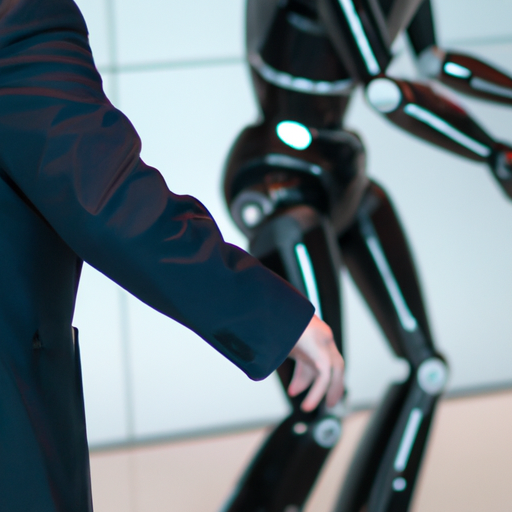
The evolution of robotics has seen machines move from repetitive industrial tasks to more complex, cognitive functions. Industrial robots have long been staples in manufacturing, assembling products with speed and precision. Today, we witness the rise of service robots in healthcare, assisting in surgeries and patient care; in logistics, optimizing warehouse operations; and even in homes, performing cleaning and security functions. The integration of AI, particularly machine learning and computer vision, has propelled robotics beyond mere automation to truly intelligent systems.
Modern robots incorporate advanced sensors, actuators, and sophisticated control systems, often leveraging AI for decision-making, object recognition, and navigation. Machine learning allows robots to adapt to new environments and learn from experience, while computer vision enables them to perceive and interpret their surroundings. This synergy is crucial for applications like autonomous vehicles, where robots must make split-second decisions based on real-time data from various sensors.
Despite their impressive capabilities, robotics still faces significant challenges. Developing robots that can robustly handle unpredictable environments, mimic human dexterity, and interact seamlessly in unstructured settings remains a complex engineering feat. Ethical considerations surrounding job displacement, safety, and the societal impact of increasingly autonomous machines are also central to the ongoing discourse. As robotics continues to advance, the collaboration between humans and robots is set to redefine productivity, safety, and daily life across all sectors.
Leave a Reply